ANDRERIEUMOVIES.COM

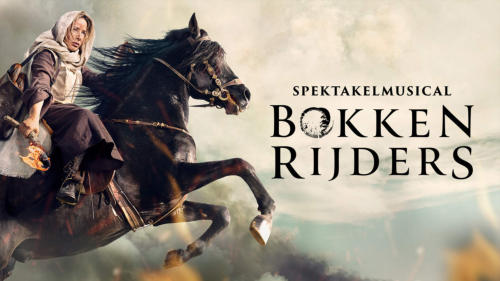
De Bokkenrijders
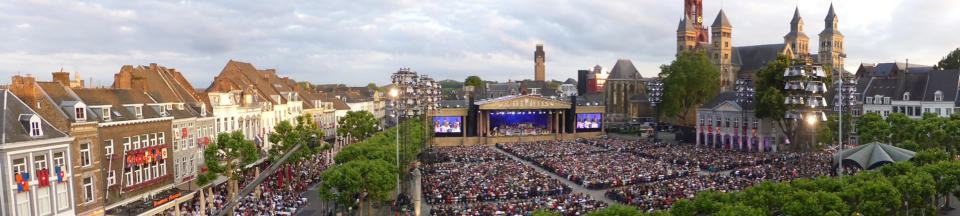
Spectacle musical in Maastricht, June 5 - 28, 2026.



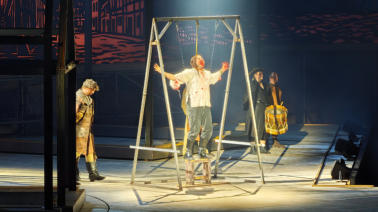
Ruud and Ineke (administrators of this website) attended a performance of the musical “Bokkenrijders”
(Goat riders) in Maastricht on Sunday, June 7, 2026.
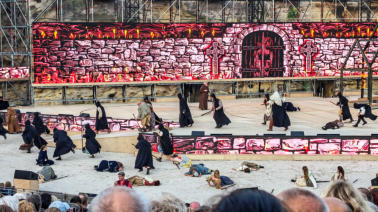
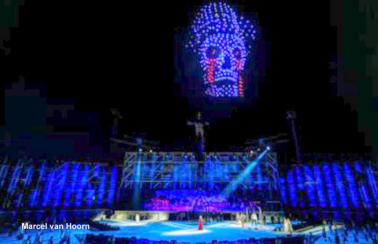
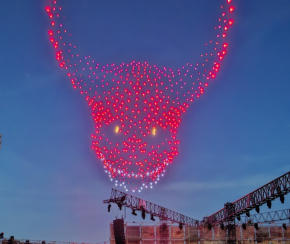
The weather conditions were perfect: no rain or strong winds, and all 600 drones were able to fly.
It is not a cheerful story. It deals with terrible poverty in the 18th century, during which the nobility and
landowners extorted the ordinary farming population and famine reigned. The population rose up in revolt,
giving rise to the legend of a gang of robbers, named Bokkenrijders, which initially had a kind of Robin Hood
goal: stealing from the rich for the benefit of the poor. It is a story of Medieval tortures, hangings, burnings
and other atrocities.
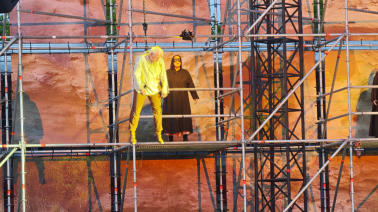
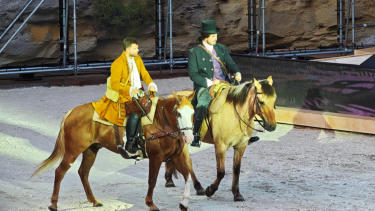
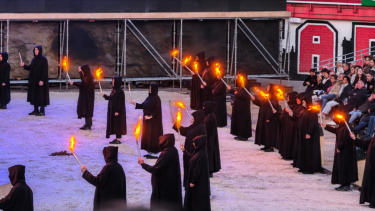
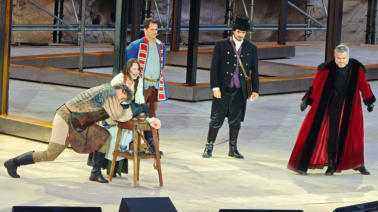
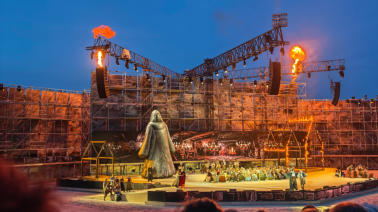
The musical, with many special effects, kept us captivated for 2 hours.
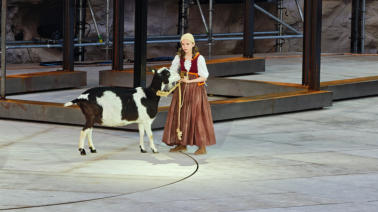
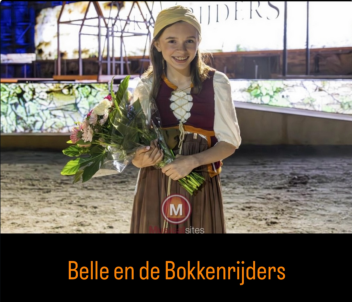
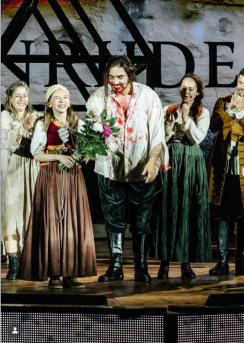
One of the smaller roles is played alternately by Belle Noten (14) and Linde Rieu (16), giving these young
girls a great opportunity to gain experience in the musical world as newcomers. During our performance,
Belle played the role of Johanna. A few days earlier Pierre, as a proud father, posted pictures of his
daughter Linde in the same role. (Click HERE).
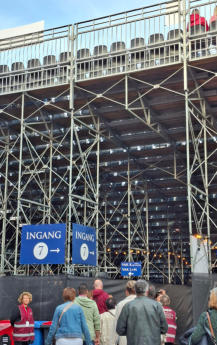
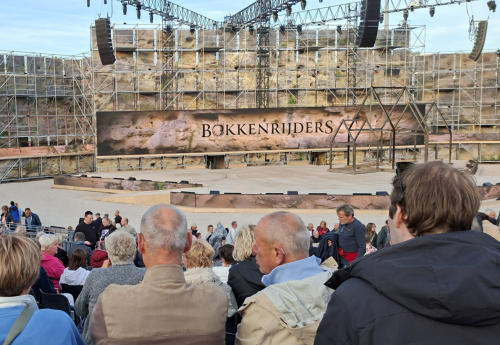
Below a few of our photos and one video (work in progress).
BOKKENRIJDERS BACKGROUND
De Limburger. By Ronald Colée
June 8, 2026
photos: Ermindo Armino, Marcel van Hoorn, Ineke/Ruud.
A drone-show with an airport, a hotel, and two highways nearby
is quite a challenge!
Will the drones fly or not? That is the big question occupying visitors to the Bokkenrijders musical
in Maastricht, now that the weather isn't really cooperating. Time to take a look at the drone pilots
from FlyingStars. "Above wind force 5 or in pouring rain, they stay on the ground."
He actually wanted a thousand of them, because that would have made for a nicer pitch: one goat, ten
horses, a hundred actors, and a thousand drones. However, it ended up being only six hundred. "With a
thousand 'flying pixels,' the formations and images become too large, and you need too large a flying area."
Six hundred drones—producer Servé Hermans of the Bokkenrijders musical in Maastricht doesn't mind. He
is thrilled that it was even possible to incorporate drones into his spectacle. After all, something like this has
never been seen before in the Netherlands. And the Maastricht native certainly enjoys pioneering.
"When we started working on Bokkenrijders, one of the first myths and legends we heard—that these
robbers supposedly flew through the air on goats—was sent by the devil himself. How do you portray that?
For an indoor performance, you might think of holograms, but outdoors that becomes more difficult. While
brainstorming at the Greek restaurant, production manager Roos Aerts and I were reminded of those
drone shows in China that pop up on all sorts of social media during New Year's. The very next day, we
started Googling." The duo ended up at FlyingStars in Gelsenkirchen, Germany, and immediately
discovered that a drone show is quite an undertaking. Especially when two highways and an airport are just
a stone's throw away. "There weren't really clear regulations yet. Are you even allowed to fly near a
highway? Doesn't that distract motorists too much? And how big does the area need to be that you cordon
off, in case one falls out of the sky? Finding answers to those kinds of questions took a lot of time. Because
for the best effect, you can only fly when it is dark AND the airport is closed. Because normally those things
fly at an altitude of 100 to 150 meters."
Music
He also had to take a maximum flight duration into account. "These drones run on batteries and can fly for
a maximum of fifteen to twenty minutes. That is why we build in a safety margin of about twelve or thirteen
minutes. Using the drones multiple times during the show is therefore not an option. Additionally, together
they sound like a large electric shaver, so you have to add music on top of that, because spoken text, for
example, gets lost in the sound." What Hermans also discovered after two performances is that the drones
attract so much attention from the audience that they pull out their phones en masse to take photos. "You
can't stop that, but it is too distracting. We therefore shortened the drone show slightly starting from the
third performance, so the focus shifted back to actress Suzan Seegers." An additional factor to consider in
Maastricht turned out to be the adjacent hotel, which meant the show could not take place exactly in the
middle above the stage. “And taking off from the parking lot near the away section of the stadium wasn't an
option either, because the drones' reception signal is too weak there. So that's where we've just stabled the
horses for now.” However, most of the coordination has to take place with air traffic control at Maastricht
Aachen Airport, the airport in Beek. “We eventually agreed on a time slot from 22:30 to 23:00 during which
we are allowed to fly. But during the dress rehearsal on Monday, there was a major airport strike in
Belgium, which meant another aircraft had to divert to Maastricht and we postponed the drone show. And
during the premiere, a cargo flight was scheduled for 22:55, which we managed to move forward by half an
hour after consultation with the airline.”
FlyingStars
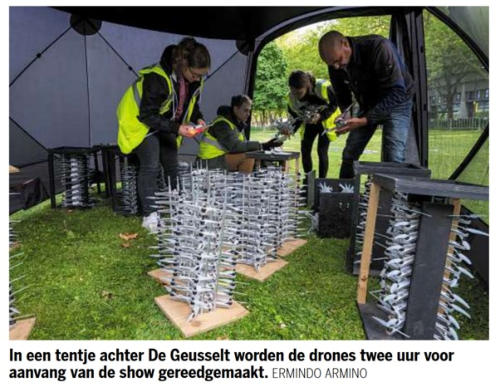
Time to take a look at the FlyingStars' own drone team, which started preparing the landing platform two
hours before the performance. "We are laying down a hundred plastic plates here, each with six drones on
it," says Ronja Donsbach of the Gelsenkirchen-based company, founded four years ago, which is present
in Maastricht with eight people. "The first show we ever performed was depicting the number 60 with fifty
drones for a birthday. Now, the minimum number you can book is a hundred drones and the maximum is
six hundred. Because even more drones, especially in such a densely populated area, take up too much
space. You mainly only see shows with five or six thousand drones in Asia anymore." The designers from
the company for Servé Hermans and Toneelgroep Maastricht have come up with approximately twelve
figures. From a devil's head to a heart, and from flames to a highwayman. “What do they cost? About 1,000
euros each. What do they weigh? About 300 grams each,” says Donsbach’s colleague Erwin Wilms. “And
normally we fly at an altitude of 120 meters, but because of the airport, we stay below 90 meters here.”
Exactly one pilot is needed to fly all the drones. “Everything is pre-programmed,” says Donsbach. “We can
keep the drones hovering motionless in the air and form images by simply changing the lights, we can
make them fly and assume various formations, and we can choose a mix of both. In all colors and at
different intensities. From dimmed to bright.” The speed of the drones is 5 meters per second, and the
distance between the drones in the air is approximately 1.5 meters. “During takeoff, we turn on the lights
for a very brief moment, then we turn them off, and once they are all in position, we let the first image
suddenly appear out of nowhere, making the surprise effect even greater.” Spectators and passers-by need
not worry about a drone falling out of the sky, although the flight area is cordoned off for safety reasons. “If
a device runs low on power, it returns to the takeoff and landing platform on its own,” Donsbach and Wilms
assure. Charging the drone batteries afterwards takes a lot of time. “We can charge two hundred drones
simultaneously, and that takes about three hours. So do the math: six hundred drones take nine hours.”
The pair emphasizes once again that safety comes first and that is why one team member is in continuous
contact with Maastricht Aachen Airport. “To ensure a good connection, we set up a special 10-meter-high
transmission mast every evening for this purpose.”
Spoiler
The only spoilsport might be the weather, says Donsbach. "Flying isn't possible above wind force 5,
because it often blows even harder at an altitude of 90 meters then. And pouring rain can also spoil the
party. But a little rain isn't a problem." "In that case, people won't get to see an inferior performance, but a
different performance," says Servé Hermans, who expects the drone show to go ahead regardless for at
least eighteen of the twenty performances. "I think that if you honestly tell the visitors beforehand that you
are dependent on these kinds of factors for an open-air performance, they will understand. After all, if it's
pouring rain at André Rieu's, the fireworks after the Vrijthof concerts won't go ahead either." Meanwhile,
Hermans' creative mind is already working overtime again. "Indoor drones *do* exist. Would you be
allowed to use those for a theater performance as well?" Flying is not possible above wind force 5,
because the wind often blows even harder at an altitude of 90 meters. And pouring rain can also spoil the
fun. But a little rain isn't a problem.
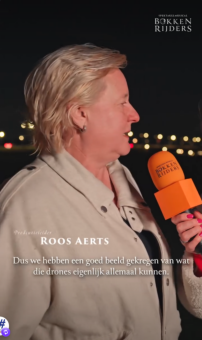
Earlier Roos Aerts worked
and toured with André Rieu.
Two hours before the start of the show,
the drones are prepared in a tent behind the stadium.
Work in progress
De Nieuwe Ster
June 10, 2026
Peter Eberson
Translation: Ineke.
Following an article in De Nieuwe Ster about the bad reviews in national newspapers (NRC,
Volkskrant, Trouw) regarding the spectacular musical Bokkenrijders, Marjorie Rieu stands up for
the Bokkenrijders team.
Email from Marjorie Rieu to De Nieuwe Ster.
"To all the creators, makers, actors, and actresses of Bokkenrijders. You are
delivering a fantastic performance. Above all, don't let bad reviews in national
newspapers bother you," she writes in an email to De Nieuwe Ster.
"Bad reviews in national newspapers? Don't let them bother you. No one
received more criticism nationally than André Rieu. He was too Maastricht-ish,
too Limburgish, and only suitable for the local audience.
The rest is history."
Signed, Marjorie Rieu, André Rieu’s wife.
Marjorie should know. She has been involved in her husband André's career from the very beginning, which
started more than 35 years ago with performances in nursing homes, community centers, neighborhood
centers, and small theaters with his Salon Orchestra. In the 1980s and early 1990s, the now world-famous
violinist was not taken seriously by reviewers and cultural journalists from national and local media. They
turned up their noses at the fact that Rieu was making classical music accessible to a large audience in a
modern guise. They were all proven wrong when Rieu became world-famous in 1994 with his version of
The Second Waltz.
In the more than thirty years that followed, Rieu remained one of the best-selling artists. This month, he is
performing with his orchestra in Copenhagen and Oslo, among other places; after that, he returns to the
Vrijthof before touring further towards London, Liverpool, Budapest, Vienna, Paris, Prague, and Lyon.
Invariably to sold-out venues.
With 40 million CDs and DVDs sold, André Rieu has now achieved the status of
a global star. Not bad for an artist who received nothing but bad reviews
nationwide at the start of his career...


- Maastricht Dinnertime
- Maastricht Preparations
- Tickets & accomodation
- Ticket Mediation
- Trains from Amsterdam Schiphol
- Trains from Brussels, Paris, Frankfurt and London
- Maastricht Fan Dinner
- Maastricht Fan Picnic
- Maastricht City Walks
- Maastricht Mosasaurus
- Daytrips from Maastricht
- Vrijthof news
- Maastricht Bonbonniere
- Maastricht ENCI quarry

- 2026 - 2030
- 2021 - 2025
- Previous items 2025 Jul - Dec
- Maastricht 2025
- Previous items 2025 Jan - Jun
- Previous items 2024 Jul - Dec
- Index of this period
- Doctor Peter de Beer
- Phil Bee
- Carlo Bonnie
- André’s Castle De Torentjes
- André gets his own stamp
- Typewriter artist
- Duo X-Elle
- Cinema experience 2024
- Quote Business Magazine
- Concerts in Bogotá, Colombia
- Margriet Magazine (1)
- Margriet Magazine (2)
- André Rieu turns 75
- André’s 75th birthday party
- Concert in Milano
- Roadsoap 5
- Presentation of second biography
- Het Financieele Dagblad
- 2024 Christmas concerts
- Interview with Marjorie
- Interview with André Rieu
- Interview from Nous Deux
- Dorona Alberti looks back
- Maastricht 2024
- Previous items 2024 Jan - Jun
- Index of this period
- Kimberly Smith
- Amsterdam New Year's concert
- MAX Magazine
- Stradivari instruments
- Golden Carriage
- Bahrain concert
- Ineke's book
- Emma's birthday in Greece
- Organic carrots
- Mexico Illness
- New animated series
- Trio SAAMN
- Andre Rieu in cinema 2024
- Sculpture of Andre Rieu
- Making of the bull
- Book 75 year Andre Rieu
- Previous items 2023 Jul - Dec
- Maastricht 2023
- Previous items 2023 Jan - Jun
- Previous items 2022 Jul - Dec
- Index of this period
- December with André
- Ivo on Sunday
- World Record Academy
- Privé / Telegraaf
- Two Vienna concerts
- Pierre Kartner (Father Abraham)
- Shellfish from ENCI quarry
- Zagreb concert
- Great Maastricht Dictation
- South America Tour
- Tribute to Queen Elizabeth II
- Rose Festival in Lottum
- Photo exhibition William Rutten
- Fake tickets on sale
- L1 interview
- Rieu and the Royals
- Interview with Pierre Rieu
- Efteling News
- Announcement Christmas concerts
- Boundlessly popular
- Maastricht 2022
- Previous items 2022 Jan - Jun
- Previous items 2021 Jul - Dec
- Index of this period
- LINDA's Winterguests
- Max Verstappen World champion F1
- Lisbon concerts
- Christmas cinema movie
- Koffietijd program
- Christmas concerts 2021 postponed
- Mindfuck
- ARD1, Club1 program
- Promoting Portugal tour
- Limburg Central article
- Andre's birthday
- Kingsday 2022 in Maastricht
- Podcast: weird hit wonder
- NDR talkshow
- 10 Christmas concerts in the MECC
- Vera Russwurm interview
- Flooding benefit program
- Humberto interview
- Flooding in Limburg
- Two best friends, Andre and Andre
- Previous items 2021 Jan - Jun
- Index of this period
- Maastrichts dialect
- Playing again!
- OP 1 Interview
- Vrijfhof 2021 concerts postponed
- Covid Vaccinations
- EVC Congress
- Julia and Kathy
- L1 Interview
- 3 AW Nights interview
- Dutch Bake-Off
- Chinese Interview
- Rijsemus Violin builder
- Al-Jazeera Interview
- Blaaskracht
- PRESS info
- Happy New Year
- 2015 - 2020
- Previous items 2020 Jul - Dec
- Previous items 2020 Jan - Jun
- Previous items 2019 Jul - Dec
- Maastricht 2019
- Previous items 2019 Jan - Jun
- Previous items 2018 Jul - Dec
- Maastricht 2018
- Previous items 2018 Jan - Jun
- Index of first half 2018
- June 26th, VNG Congress
- May 13th, Duckrace
- May 12th, Professor Scherder
- May 11th, Time for Max
- Bulgaria concerts
- Fake Rieus
- April 2018, Tel Aviv
- East USA Tour
- MDR Um 4, March 26th,2018
- May 9th, Sandy beach radio
- Universal Music Award
- Semper Opern Ball
- New Years Concert Amsterdam
- Previous items 2017 Jul - Dec
- Lift-Off Splash Percussian School
- Index of 2nd half 2017
- Carmen Nebel show
- Christmas Events 2017
- Interview with Frank Michael
- Celebrity Radio interview
- UK Tour 2017
- USA Tour 2017
- German Tour 2017
- Q&A with fans on Facebook
- Sunday Night Interview
- Mexico Donation
- Day-Time in Maastricht
- RTL Helemaal het einde
- ARD Brisant
- NDR Tietjen and Bommes
- Making of Cinema video
- Maastricht 2017
- Previous items 2017 Jan - Jun
- Index of first half 2017
- Interview with Steven Wright BBC2
- Portrait of a Passion
- The "Real" Andre Rieu
- Welcome to my World 2
- Double interview Andre Rieu and Jo Cortenaedt
- Mirusia "From The Heart"
- Larura Engel "En Canto"
- Refugee brought Andre Rieu success
- Carla Maffioletti "A Dream"
- Venetian Carnival Revelers
- Golden Oldie from 1985
- Agnes Fizzano's shop
- Carnival speech Mayor of Maastricht
- Maastricht Pastry Route
- 2017 Valentines day
- Rieu plays in Semper Oper Dresden
- Linda Custers, Princess Carnaval
- New Years concert Ziggo Dome
- Ziggo Dome rehearsal
- Previous items 2016 Jul - Dec
- 2016 Jul - Dec, Index
- SBS6 Stars Surprise Show Dec 21st, 2016
- Liverpool december 2016
- Magic Maastricht 2016
- BBC Breakfast Today Show
- ARD Advent Show
- Two Million Likes
- CinemaLive Christmas
- SWR 4 German TV
- Strictly Come Dancing
- The meaning of life
- Leute Heute
- Dancing with the Stars
- In Conversation
- Free Mini Concert in Maastricht
- L1 Radio Interview
- Josti Band 50 years
- NDR Talk Show
- New Maastricht Salon orchestra
- Rieu in Cinema
- Maastricht 2016
- Previous items 2016 Jan - Jun
- Previous items 2015 Jul - Dec
- 2015 Jul - Dec, Index
- Rieu entertainment
- Dec. 2015, Bild Star Magazine part 4
- Dec. 2015, Bild Star Magazine part 3
- Dec. 2015, Bild Star Magazine part 2
- Dec. 2015, Bild Star Magazine part 1
- Nov. 17th, 2015, RTL Boulevard
- Nov. 12th, Shownieuws
- Nov. 16th, Loose Women
- Oct. 30th, Colectiv Club Fire, Bucharest
- Roman Holiday (3)
- Roman Holiday (2)
- Roman Holiday (1)
- Oct. 26th, Classic FM Q&A
- Oct. 23rd, MDR at 4 PM
- Oct. 10th, Jubilee Award
- Sep. 19th, 2015, Carmen Nebel
- Maastricht 2015
- Previous items 2015 Jan - Jun
- 2015 Jan - Jun, Index
- Code M, the movie
- Bucharest Concerts Part 1
- Bucharest Concerts Part 2
- A Latin Breeze
- Maestro without borders
- Copenhagen Concert
- Brazilian Fans
- George Harper In Memoriam
- Press Conference Romania Open Air Concerts
- RTL Late Night Show
- AvroTros TV Show
- Cologne Concert
- Valentine's day
- Tempeleers Carnaval Medal
- Markus Lanz Talk Show
- 2007 - 2014
- Previous items 2014 Jan - Jun
- Maastricht 2014
- Maastricht 2014, The Preparations
- Maastricht 2014, (Dress) Rehearsal
- Maastricht 2014, The Concerts
- Maastricht 2014, Fan Dinner
- Maastricht 2014, Three Fan Picnics
- Maastricht 2014, Lift-Off
- Maastricht 2014, Exhibition Marc Rieu
- Maastricht 2014, Our Story Page 1
- Maastricht 2014, Our Story Page 2
- Maastricht 2014, Venetian Carnival, the making of
- Previous items 2014 Jul - Dec
- Previous items 2013 Jul - Dec
- Advent Calendar 2013
- Spirit of Christmas
- Nelson Mandela
- Movie Marina
- BBC Breakfast Show
- German TV programs (1)
- German TV programs (2)
- L1 Late November 5th, 2013
- RTL Boulevard, October 31st, 2013
- Amira Willighagen
- Evenblij with....
- Australian tour 2013
- German TV Sept.2013
- ORF Vera Russwurm
- Jean-Philippe composes ode to Mary
- Tietjen and Hirschhausen 2013
- Rieu to play on North Pole?
- Maastricht 2013
- Previous items 2013 Jan - Jun
- RTL Boulevard June 19th, 2013
- Jean-Philippe's children's books
- What I know about women
- AR-Academy
- Copenhagen concert
- SkyArts2
- Limbourgeois April 30th
- The making of the Coronation concert
- King's inauguration Day 2
- King's inauguration Day 1
- King's Waltz
- Charity TV broadcast
- classicFM interview
- Trini Lopez
- Jean-Philippe's book
- Jermaine Jackson
- Dutch Queen Abdicates
- history fan websites
- Cologne, Jan.1st 2013
- Previous items 2012 Jul - Dec
- Limbourgeois 25 December 2012
- Chistmas in Birmingham
- Linda Magazine, December 2012
- Advent calendar
- Cinema Heerlen 2012
- Boulevard Nov 21, 2012 and Ajax
- André's Birthhouse
- UK TV Programs November 2012
- Classic Brit Award
- Andre in Brazil 2012
- Interview Dolman Rieu
- BVN Trophy 2012
- Westland Fruit and Flower parade
- L1mbourgeois August 19, 2012
- Maastricht concert 2012
- Previous items 2012 Jan - Jun
- Previous items 2011 Jul - Dec
- Maastricht 2011
- Previous items 2011 Jan - Jun
- The person behind the phenomenon
- Andre and Hopkins
- Interview in Vienna
- Frank Steijns and "Normaal" band
- PBS visiting Maastricht 2006
- Amsterdam ArenA 2011
- Pierres Hobby
- DWDD May 26th, 2011
- Madiwodovrijdag show
- André Rieu and Anthony Hopkins
- Mirusia DVD release
- Scary moments in South Africa
- BUMA Export award 2010
- Interview with Mirusia
- WDR swap reporter
- Previous items 2010 Jul - Dec
- Platin Tenors at the Cologne Christmas market
- Koffietijd December 20th, 2010
- Christmas concert by Mirusia
- Today Show December 18th, 2010
- Ice Sculpture Maastricht 2010
- The André Rieu Story
- UK November 2010 appearances
- Mexico City, November 28th, 2010
- Ivo Niehe interviews André Rieu after his illness
- André is Back!!
- LeuteHeute 151110
- André is rehearsing again
- First interview after sickness
- André cancels UK and Aussie 2010 tour
- Jubilee book 30 years André Rieu
- Interview with Pierre about André's ilness.
- Three hours marathon interview
- André escapes Toronto
- Previous items 2010 Jan - Jun
- Maastricht 2010
- Maastricht Winery, South Africa
- The best of Thirty Years André Rieu
- Mainau 2010, "Roses from the South"
- Dancing on Ice, 2010 UK finals
- Maastricht Stampsheet
- André to play for Queen Beatrix of The Netherlands
- At home with Bela Mavrak
- Export award 2009
- Farewell mayor Leers
- Flikken Maastricht
- Cologne 2010 concert
- Previous items 2009
- André and Friends ArenA 2009
- André's 2009 Christmas interview
- Christmas with Carmen Nebel
- Frank Steijns carillon
- Dutchman of the Year 2009
- Royal Variety Performance
- Brisant
- Dreams come true
- André's twins
- MDR André 60th birthday interview
- Sydney Oct.2009
- Ivo Niehe's interview with Mirusia Louwerse
- Maastricht Liberators
- Heidelberg September 2009
- Maastricht 2009, the concert
- Maastricht 2009 update
- America Tour 2009
- The week of André Rieu
- André in Villa VANTHILT
- Boulevard and Knevel and van den Brink
- André Rieu about New York
- Carmen Nebel in Maastricht
- André named best selling male artist
- André Rieu Stamp Booklet
- Maastricht 2009
- Interview with André on RTL9
- Marc Rieu, the other son
- Andre Rieu on his way to Australia
- André and Vegemite
- Ruud and Ineke meet Kathi (Caramia)
- Road Soap review
- André in de ArenA
- André get awards
- Good afternoon Limburg
- van der Vorst ziet sterren
- Previous items 2008
- Australian interviews with André
- Holiday in Australia
- Ivo Melbourne
- From Maastricht to Melbourne
- Interviews December 2008
- Melbourne Concert 2008
- Trier 2004
- Dresden
- Kerner and Nebel
- Maastricht but different
- Maastricht Vrijthof concert 2008, the highlights
- 60 Minutes, André Rieu and Andrea Bocelli
- Maastricht 2008 concert
- Aussie Interviews
- André in Ottawa
- Andre Rieu Tulips in Ineke's garden
- Ovation-Schofield
- De Rode Loper
- Boulevard
- Riverboat
- The Last Show
- Benny Neyman
- Ivo Niehe March 2008
- Kruispunt
- Tietjen and Dibaba
- Toronto by Alice Leung
- Toronto 2007
- Cologne 2008 concert
- Previous items 2007

- Agnes Fizzano-Walter
- Anna Majchrzak
- Anna Reker
- Annabelle Traves
- Béla Mavrák
- Bibi Ortjens
- Boris Goldenblank
- Brass section
- Carla Maffioletti
- Carmen Monarcha
- Christina Petrou
- Cord Meyer Leusink
- Donij van Doorn
- Els Mercken
- Emma Kok
- Frank Steijns
- Gary Bennett
- Gosia Tarnowski
- Gracenotes
- Jean Sassen
- Joline Soomers
- Justinas Kaunas
- Kimmy Skota
- Kremi Minerva
- Laura Engel
- Lift-Off (Marcel Falize)
- Marcel Falize (1)
- Maja Jasinska
- Maastricht Salon Orchestra
- Manoe Konings
- Michaela Oeste
- Michel Tirabosco
- Mirusia Louwerse
- Night of the Proms
- Pierre Rieu
- Platin Tenors
- Rene Henket family
- Roger Diederen
- Romano Diederen
- Ruud Merx / Lin Jong
- SAAMN trio
- Sanne Mestrom
- Serena Vanheuverswijn
- Stéphanie Detry
- Suzan Erens
- Tanja Derwahl
- Tiroler ohne Berge (Marcel Falize)
- VerrasSing
- Vincenzo Viola


- 2000 - 2009
- 2009: Andre meets Mr. Wijdbeens
- 2006: Josti Band
- 2006: Profiel
- 2005: Art Express Classic
- 2005: Interview with Catherine Keyl
- 2004: Portrait of a Passion
- 2004: André van Duin meets André Rieu
- 2004: Trier concert
- 2004: Rehearsal for Tros 40 year song
- 2003: Barbara Wussow
- 2002: TROS Cruise
- 2002: Barend en van Dorp
- 2001: José Carrera Gala
- 2001: The Ländler
- 2001: Open House
- 2000: BZN meets André Rieu
- 2000: A Dream Come True
- 1989 - 1999
- 1999: Andre @ Spanish RTVE
- 1999: Laat de Leeuw
- 1999: Alfredissimo
- 1998: Lesley Garrett
- 1998: Celebrities
- 1998 Early JSO
- 1997: Strauss Party - Kiel
- 1997/98 Bill's oldies 2
- 1997/98 Bill's oldies 1
- 1997: Im Krapfenwald
- 1996: Snow White, a fairytale
- 1996: André Rieu "In Concert"
- 1996: Charity Concert
- 1995 André and André
- 1995: Wiener Melange - Lübeck
- 1995: Karel van der Graaf
- 1995: Musikantenstadl
- 1995: TROS Op nieuwe toeren
- 1995: Carré Theatre (The Vienna I love)
- 1995: Veleta
- 1995: TVcommercial/A.van Duin
- 1995: First videoclip
- 1995: Angela's Challenge
- 1994: Schutterij EMM Ooy
- 1994: Strauss & Co
- 1994: Olympic Stadium
- 1992: Before he got famous
- 1989: Tineke's TV years
- Tour Programs 1987/88
- Tour Programs 1994/95
- 1985


