ANDRERIEUMOVIES.COM

Skeleton found of d’Artagnan?
Mystery solved?



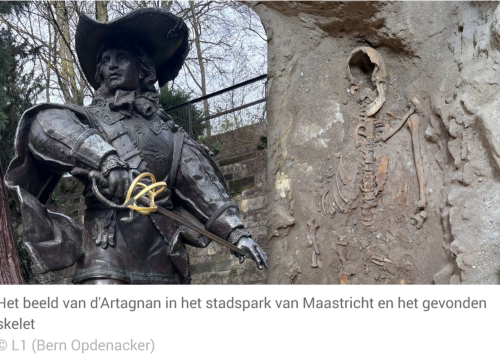
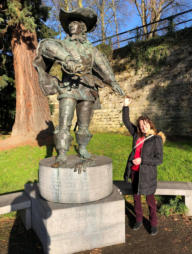
The statue of d'Artagnan in the city park (section Van Aldenhofpark) of
Maastricht and the discovered skeleton © L1 (Bern Opdenacker)
L1 News,
March 25, 2026
Photos: Christianne Schreuder, Bern Opdenacker
Translation Ineke/Diana D. Le
Spectacular find in Maastricht church:
'Everything points to skeleton of world-famous d'Artagnan'
It could be one of the most spectacular historical finds ever in the Netherlands: a skeleton has been
discovered in a church in Maastricht that possibly belongs to the famous French musketeer
d'Artagnan. The whereabouts of the French folk hero have been a mystery for hundreds of years.
The French musketeer Charles de Batz de Castelmore d'Artagnan, as he was fully named, was killed
during a 17th-century battle in Maastricht. A DNA test must now determine whether the remains discovered
in the Maastricht church actually belong to d'Artagnan.
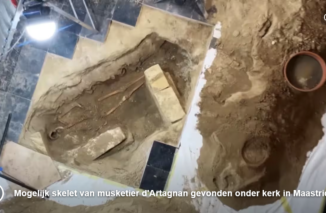
These are drone images of the grave, taken in the church of Wolder.
Drone image
Under the old altar
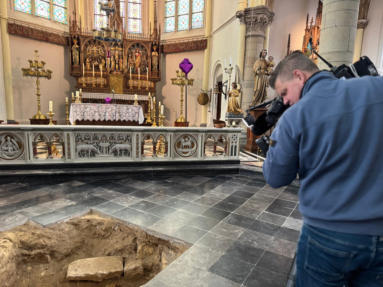
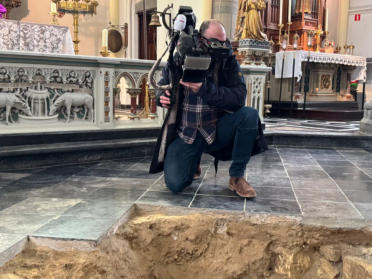
The skeleton was found in the nave of the St. Peter and Paul Church in the Wolder district of Maastricht,
right in front of the current altar. The contemporary church is presumably the second or even third structure
at this location, with roots going back to the 13th and possibly even the 11th century.
The discovery came to light after part of the church floor subsided in February. During the subsequent
repair work, the floor was broken open, revealing the remains.
A long-standing suspicion
It had been a suspicion for years that d'Artagnan might be buried in the church of Wolder. Yet, despite
indications, the remains had never been excavated for research purposes before.
D’Artagnan was killed on June 25, 1673, during the siege of Maastricht, where the French army of Louis
XIV was attempting to capture the city. According to legend, he was fatally struck a little further away, near
the Tongersepoort, by a musket ball that hit him in the throat. Due to the warm temperature and the failure
of the battle to end quickly, it was presumably decided not to transport the body to Paris. The Catholic King
therefore chose to bury the soldier of honor in Maastricht, in so-called consecrated ground.
The French army had set up its encampment in Wolder, close to the village church at the time. That church
was, most likely designated as d’Artagnan’s final resting place.
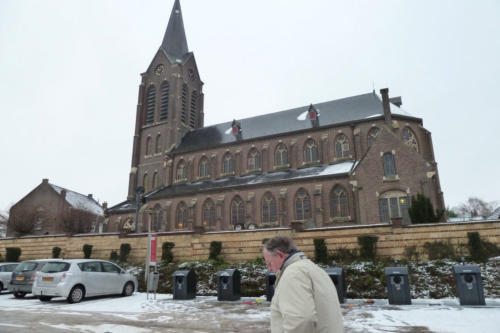
This is the Peter and Paul
Church in Wolder,
Maastricht in 2012.
Ruud is walking in front!
We were there, since we
are interested in history
and Ruud created a nice
city walk, including a
d’Artagnan tour, on our
website, click HERE.
(Scroll down to page 26)
Soon, he’ll update the
document when the DNA
check confirms that the
skeleton is d’Artagnan’s!!
French folk hero and national legend: who was d'Artagnan?
What William of Orange is to the Netherlands, d'Artagnan is to France: a national hero. The musketeer was
a confidant of Louis XIV and played a role in French military successes. Membership in the royal guard was
considered honorable, despite the low pay. His death, resulting from courage and loyalty to the king,
became a significant historical moment. As a result, Maastricht secured a place in French national history
(books).
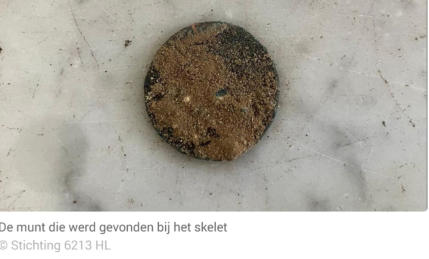
Coin in grave
Deacon Jos Valke was present at the first excavation and immediately sensed that it was a remarkable
historical discovery. "A French coin lay by his body," says Valke, confirming the status of the deceased.
"Moreover, the location of the grave indicates that it concerns an important person: the skeleton lay on the
spot where the altar used to stand, and only royal or other important figures were buried under an altar at
that time."
DNA research
To determine whether it is indeed d'Artagnan, a DNA sample was taken from the skeleton on March 13.
"That is best done from the teeth, preferably a tooth with the root. Because that is where the most usable
material is, I have been told," says Valke. A laboratory in Munich is now comparing this DNA with that of a
descendant of the historical French figure. In the vicinity of Avignon, there is another bloodline on the
father's side: Bertrand de Batz de Castelmore. That DNA is currently being analyzed. The result is expected
soon.
This coin was found with the skeleton
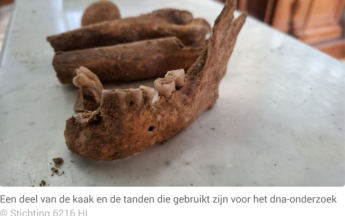
Part of the jaw and teeth used for the DNA
analysis. © Stichting 6213 HL
Hope is high
Although there is no hard evidence yet, everything seems to point towards the right hand of the French
king. For instance, remnants of a musket ball were found near the ribs. This corresponds with the
description of d'Artagnan's injury in history books.
The involved archaeologist, Wim Dijkman, confirms this as well. Although he himself prefers to wait for the
indisputable results from Munich. "I am still being very cautious; I am a scientist. But my expectations are
high," says Dijkman. "I have been researching d'Artagnan's tomb for 28 years. This could be the highlight of
my career. I have had many contacts in France for years, and they always ask me why d'Artagnan has not
yet been found. That seems to be the case now, because so far nothing has been found that contradicts the
idea that this is not him. But again: I am awaiting the DNA analysis."
For a long time, the location of d'Artagnan's final resting place remained a mystery. It even became
part of the national legend surrounding the figure. It is quite possible that this mystery will soon be
solved.
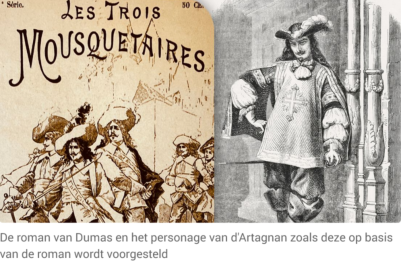
Two d’Artagnans
There are actually two d’Artagnans: the historical figure—who actually existed—and the fictional character
of the musketeer. The general public knows the latter primarily through the nineteenth-century novel *Les
trois Mousquetaires* (The Three Musketeers) by the French writer Alexandre Dumas. D’Artagnan was the
fourth musketeer. Dumas’ books have been adapted into films more than a hundred times, ranging from
Hollywood productions to Chinese Kung Fu movies. However, Dumas’ version deviates somewhat from
reality: he added romanticized elements and altered details for literary effect. For instance, the book
character is a man in his early thirties, whereas the historical d’Artagnan was well over sixty years old and
not in the best condition when he died.
Security measures
The skeleton has since been removed from the church and is now at an archaeological institute in
Deventer. The items that lay with the remains in the grave are also no longer present in the church. Finally,
the church board installed an alarm system last month to deter unwanted visitors, such as grave robbers.
Mayor proud, but cautious
The Mayor of Maastricht, Wim Hillenaar, reacts enthusiastically to the discovery of the skeleton but is
reserved with comments for the time being. "If the DNA research confirms this, it would be a remarkable
discovery within an important chapter in the history of Maastricht," said the mayor. "At the same time, it is
now of great importance that the ongoing investigation can be conducted with the necessary care and
scientific accuracy. Until those results are known, we should exercise caution”.
Hillenaar says he is following the news with justifiable pride. "We twould like to thank all the researchers,
archaeologists, and volunteers involved for their dedication and professionalism, and we look forward to the
results with anticipation and a healthy sense of excitement."
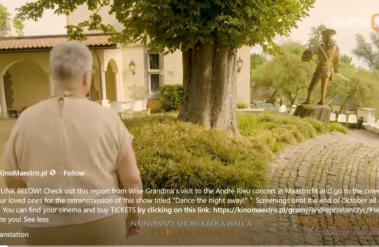
Note Ineke/Diana: André Rieu always claimed that, according to legend, d’Artagnan ate his last breakfast in
his historic castle-kitchen (1673), before he fell in battle near the city walls of Maastricht.
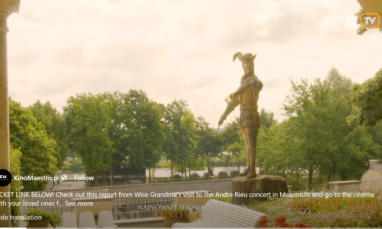
Recently (2024/25) André had finally cut down the leaning tree in his backyard that he wanted to do for a
long time, and a sculptor carved d’Artagnan from the trunk. You can see the wooden sculpture standing on
the base of the cut tree trunk.
(Diana took the screenshots from a video of a TV program promoting André Rieu’s “Waltz the night away”
movie, in the Polish cinemas, filmed during the July 2025 concerts).
Dumas's novel and the character of d'Artagnan as
presented based on the novel © iStock
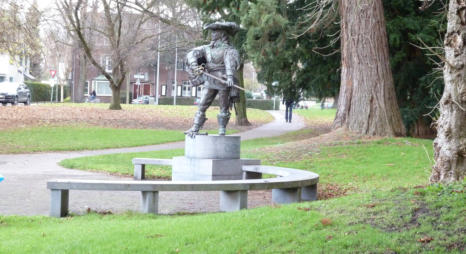
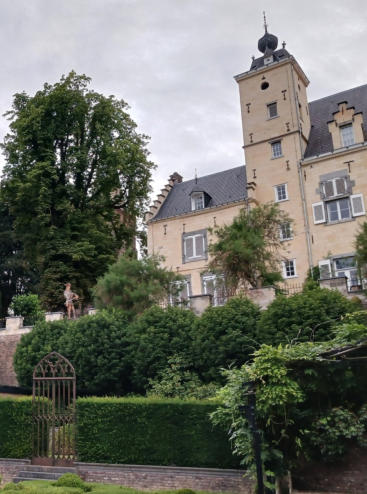
Castle backyard 2025.
Van Aldenhofpark, Maastricht.
Video by L1, duration 2,5 minutes.
March 25, 2026
Chapeau Magazine,
Jo Cortenraedt
d’Artagnan’s grave possibly found in Maastricht
The grave of the famous French musketeer d’Artagnan, also known as Charles de Batz de Castelmore,
may have been found in the St. Peter and St. Paul Church in the Wolder district of Maastricht.
With the permission of the church board and the municipality of Maastricht, archaeological research was
conducted there on March 13, and a skeleton was found at the foot of the altar.
Various institutes at home and abroad are now examining this man's skeleton. According to Camille
Oostwegel Sr., Capitaine-Lieutenant de la Compagnie des Mousquetaires d’Armagnac in the Netherlands,
it is 90 percent certain that it is d’Artagnan. “It was already known that d’Artagnan was killed at the gates of
Maastricht on June 25, 1673, but his grave has never been found before. If we can establish this with
certainty soon, it will be world news. I have already discreetly informed the palace of French President
Macron.”
The investigation is being led by former Maastricht municipal archaeologist Wim Dijkman, who conducted
the excavation with a team of archaeologists.
“A bullet was found in the kidney area,” reports Oostwegel. “It has already been
established that it concerns a man of around 60 years old, and that also matches. The
scientific investigation will be completed in the coming weeks, and then we hope to
obtain certainty. In that case, it will become a major diplomatic discussion between the
Netherlands and France as to whether the remains of this musketeer should remain in
Maastricht or whether he should be reburied in France. For to the French, he is one of
the greatest heroes in history, who died in the service of the illustrious King Louis XIV.
In any case, Maastricht will once again become world news, following the Treaty of
Maastricht, TEFAF, and André Rieu.”
Visited by André Rieu fans
De Nieuwe Ster, The new Star,
March 25, 2026,
Article and photos by Marianne Lubrecht
D’Artagnan’s skeleton found?
On March 13, during an investigation at the foot of the former medieval church in the St. Peter and Paul
Church in Wolder, a male skeleton was found. It is possible that these are the remains of French musketeer
D’Artagnan, the confidant of King Louis XIV, who fell during the siege of Maastricht on June 25, 1673. The
news led to TV crews flooding Wolder all day long. Press interest was enormous.
What happened to D’Artagnan’s body has never become clear. D’Artagnan’s biographer, Odile Bordaz, has
always assumed that he must have been buried in the church of Wolder because the French army had
pitched its enormous tent canopy close to the church of Wolder. Whether that is actually the case will have
to be determined by an examination of the skeletal remains. ‘Caution is warranted for the time being,’ say
both Camille Oostwegel and archaeologist Wim Dijkman in response to the find.
Worldwide, D’Artagnan has achieved heroic status due to his loyalty and courage, partly through the
fictionalization of his person in the nineteenth-century novels of Alexandre Dumas père and later films,
comic books, and musicals.



- Maastricht Dinnertime
- Maastricht Preparations
- Tickets & accomodation
- Ticket Mediation
- Trains from Amsterdam Schiphol
- Trains from Brussels, Paris, Frankfurt and London
- Maastricht Fan Dinner
- Maastricht Fan Picnic
- Maastricht City Walks
- Maastricht Mosasaurus
- Daytrips from Maastricht
- Vrijthof news
- Maastricht Bonbonniere
- Maastricht ENCI quarry

- 2026 - 2030
- 2021 - 2025
- Previous items 2025 Jul - Dec
- Maastricht 2025
- Previous items 2025 Jan - Jun
- Previous items 2024 Jul - Dec
- Index of this period
- Doctor Peter de Beer
- Phil Bee
- Carlo Bonnie
- André’s Castle De Torentjes
- André gets his own stamp
- Typewriter artist
- Duo X-Elle
- Cinema experience 2024
- Quote Business Magazine
- Concerts in Bogotá, Colombia
- Margriet Magazine (1)
- Margriet Magazine (2)
- André Rieu turns 75
- André’s 75th birthday party
- Concert in Milano
- Roadsoap 5
- Presentation of second biography
- Het Financieele Dagblad
- 2024 Christmas concerts
- Interview with Marjorie
- Interview with André Rieu
- Interview from Nous Deux
- Dorona Alberti looks back
- Maastricht 2024
- Previous items 2024 Jan - Jun
- Index of this period
- Kimberly Smith
- Amsterdam New Year's concert
- MAX Magazine
- Stradivari instruments
- Golden Carriage
- Bahrain concert
- Ineke's book
- Emma's birthday in Greece
- Organic carrots
- Mexico Illness
- New animated series
- Trio SAAMN
- Andre Rieu in cinema 2024
- Sculpture of Andre Rieu
- Making of the bull
- Book 75 year Andre Rieu
- Previous items 2023 Jul - Dec
- Maastricht 2023
- Previous items 2023 Jan - Jun
- Previous items 2022 Jul - Dec
- Index of this period
- December with André
- Ivo on Sunday
- World Record Academy
- Privé / Telegraaf
- Two Vienna concerts
- Pierre Kartner (Father Abraham)
- Shellfish from ENCI quarry
- Zagreb concert
- Great Maastricht Dictation
- South America Tour
- Tribute to Queen Elizabeth II
- Rose Festival in Lottum
- Photo exhibition William Rutten
- Fake tickets on sale
- L1 interview
- Rieu and the Royals
- Interview with Pierre Rieu
- Efteling News
- Announcement Christmas concerts
- Boundlessly popular
- Maastricht 2022
- Previous items 2022 Jan - Jun
- Previous items 2021 Jul - Dec
- Index of this period
- LINDA's Winterguests
- Max Verstappen World champion F1
- Lisbon concerts
- Christmas cinema movie
- Koffietijd program
- Christmas concerts 2021 postponed
- Mindfuck
- ARD1, Club1 program
- Promoting Portugal tour
- Limburg Central article
- Andre's birthday
- Kingsday 2022 in Maastricht
- Podcast: weird hit wonder
- NDR talkshow
- 10 Christmas concerts in the MECC
- Vera Russwurm interview
- Flooding benefit program
- Humberto interview
- Flooding in Limburg
- Two best friends, Andre and Andre
- Previous items 2021 Jan - Jun
- Index of this period
- Maastrichts dialect
- Playing again!
- OP 1 Interview
- Vrijfhof 2021 concerts postponed
- Covid Vaccinations
- EVC Congress
- Julia and Kathy
- L1 Interview
- 3 AW Nights interview
- Dutch Bake-Off
- Chinese Interview
- Rijsemus Violin builder
- Al-Jazeera Interview
- Blaaskracht
- PRESS info
- Happy New Year
- 2015 - 2020
- Previous items 2020 Jul - Dec
- Previous items 2020 Jan - Jun
- Previous items 2019 Jul - Dec
- Maastricht 2019
- Previous items 2019 Jan - Jun
- Previous items 2018 Jul - Dec
- Maastricht 2018
- Previous items 2018 Jan - Jun
- Index of first half 2018
- June 26th, VNG Congress
- May 13th, Duckrace
- May 12th, Professor Scherder
- May 11th, Time for Max
- Bulgaria concerts
- Fake Rieus
- April 2018, Tel Aviv
- East USA Tour
- MDR Um 4, March 26th,2018
- May 9th, Sandy beach radio
- Universal Music Award
- Semper Opern Ball
- New Years Concert Amsterdam
- Previous items 2017 Jul - Dec
- Lift-Off Splash Percussian School
- Index of 2nd half 2017
- Carmen Nebel show
- Christmas Events 2017
- Interview with Frank Michael
- Celebrity Radio interview
- UK Tour 2017
- USA Tour 2017
- German Tour 2017
- Q&A with fans on Facebook
- Sunday Night Interview
- Mexico Donation
- Day-Time in Maastricht
- RTL Helemaal het einde
- ARD Brisant
- NDR Tietjen and Bommes
- Making of Cinema video
- Maastricht 2017
- Previous items 2017 Jan - Jun
- Index of first half 2017
- Interview with Steven Wright BBC2
- Portrait of a Passion
- The "Real" Andre Rieu
- Welcome to my World 2
- Double interview Andre Rieu and Jo Cortenaedt
- Mirusia "From The Heart"
- Larura Engel "En Canto"
- Refugee brought Andre Rieu success
- Carla Maffioletti "A Dream"
- Venetian Carnival Revelers
- Golden Oldie from 1985
- Agnes Fizzano's shop
- Carnival speech Mayor of Maastricht
- Maastricht Pastry Route
- 2017 Valentines day
- Rieu plays in Semper Oper Dresden
- Linda Custers, Princess Carnaval
- New Years concert Ziggo Dome
- Ziggo Dome rehearsal
- Previous items 2016 Jul - Dec
- 2016 Jul - Dec, Index
- SBS6 Stars Surprise Show Dec 21st, 2016
- Liverpool december 2016
- Magic Maastricht 2016
- BBC Breakfast Today Show
- ARD Advent Show
- Two Million Likes
- CinemaLive Christmas
- SWR 4 German TV
- Strictly Come Dancing
- The meaning of life
- Leute Heute
- Dancing with the Stars
- In Conversation
- Free Mini Concert in Maastricht
- L1 Radio Interview
- Josti Band 50 years
- NDR Talk Show
- New Maastricht Salon orchestra
- Rieu in Cinema
- Maastricht 2016
- Previous items 2016 Jan - Jun
- Previous items 2015 Jul - Dec
- 2015 Jul - Dec, Index
- Rieu entertainment
- Dec. 2015, Bild Star Magazine part 4
- Dec. 2015, Bild Star Magazine part 3
- Dec. 2015, Bild Star Magazine part 2
- Dec. 2015, Bild Star Magazine part 1
- Nov. 17th, 2015, RTL Boulevard
- Nov. 12th, Shownieuws
- Nov. 16th, Loose Women
- Oct. 30th, Colectiv Club Fire, Bucharest
- Roman Holiday (3)
- Roman Holiday (2)
- Roman Holiday (1)
- Oct. 26th, Classic FM Q&A
- Oct. 23rd, MDR at 4 PM
- Oct. 10th, Jubilee Award
- Sep. 19th, 2015, Carmen Nebel
- Maastricht 2015
- Previous items 2015 Jan - Jun
- 2015 Jan - Jun, Index
- Code M, the movie
- Bucharest Concerts Part 1
- Bucharest Concerts Part 2
- A Latin Breeze
- Maestro without borders
- Copenhagen Concert
- Brazilian Fans
- George Harper In Memoriam
- Press Conference Romania Open Air Concerts
- RTL Late Night Show
- AvroTros TV Show
- Cologne Concert
- Valentine's day
- Tempeleers Carnaval Medal
- Markus Lanz Talk Show
- 2007 - 2014
- Previous items 2014 Jan - Jun
- Maastricht 2014
- Maastricht 2014, The Preparations
- Maastricht 2014, (Dress) Rehearsal
- Maastricht 2014, The Concerts
- Maastricht 2014, Fan Dinner
- Maastricht 2014, Three Fan Picnics
- Maastricht 2014, Lift-Off
- Maastricht 2014, Exhibition Marc Rieu
- Maastricht 2014, Our Story Page 1
- Maastricht 2014, Our Story Page 2
- Maastricht 2014, Venetian Carnival, the making of
- Previous items 2014 Jul - Dec
- Previous items 2013 Jul - Dec
- Advent Calendar 2013
- Spirit of Christmas
- Nelson Mandela
- Movie Marina
- BBC Breakfast Show
- German TV programs (1)
- German TV programs (2)
- L1 Late November 5th, 2013
- RTL Boulevard, October 31st, 2013
- Amira Willighagen
- Evenblij with....
- Australian tour 2013
- German TV Sept.2013
- ORF Vera Russwurm
- Jean-Philippe composes ode to Mary
- Tietjen and Hirschhausen 2013
- Rieu to play on North Pole?
- Maastricht 2013
- Previous items 2013 Jan - Jun
- RTL Boulevard June 19th, 2013
- Jean-Philippe's children's books
- What I know about women
- AR-Academy
- Copenhagen concert
- SkyArts2
- Limbourgeois April 30th
- The making of the Coronation concert
- King's inauguration Day 2
- King's inauguration Day 1
- King's Waltz
- Charity TV broadcast
- classicFM interview
- Trini Lopez
- Jean-Philippe's book
- Jermaine Jackson
- Dutch Queen Abdicates
- history fan websites
- Cologne, Jan.1st 2013
- Previous items 2012 Jul - Dec
- Limbourgeois 25 December 2012
- Chistmas in Birmingham
- Linda Magazine, December 2012
- Advent calendar
- Cinema Heerlen 2012
- Boulevard Nov 21, 2012 and Ajax
- André's Birthhouse
- UK TV Programs November 2012
- Classic Brit Award
- Andre in Brazil 2012
- Interview Dolman Rieu
- BVN Trophy 2012
- Westland Fruit and Flower parade
- L1mbourgeois August 19, 2012
- Maastricht concert 2012
- Previous items 2012 Jan - Jun
- Previous items 2011 Jul - Dec
- Maastricht 2011
- Previous items 2011 Jan - Jun
- The person behind the phenomenon
- Andre and Hopkins
- Interview in Vienna
- Frank Steijns and "Normaal" band
- PBS visiting Maastricht 2006
- Amsterdam ArenA 2011
- Pierres Hobby
- DWDD May 26th, 2011
- Madiwodovrijdag show
- André Rieu and Anthony Hopkins
- Mirusia DVD release
- Scary moments in South Africa
- BUMA Export award 2010
- Interview with Mirusia
- WDR swap reporter
- Previous items 2010 Jul - Dec
- Platin Tenors at the Cologne Christmas market
- Koffietijd December 20th, 2010
- Christmas concert by Mirusia
- Today Show December 18th, 2010
- Ice Sculpture Maastricht 2010
- The André Rieu Story
- UK November 2010 appearances
- Mexico City, November 28th, 2010
- Ivo Niehe interviews André Rieu after his illness
- André is Back!!
- LeuteHeute 151110
- André is rehearsing again
- First interview after sickness
- André cancels UK and Aussie 2010 tour
- Jubilee book 30 years André Rieu
- Interview with Pierre about André's ilness.
- Three hours marathon interview
- André escapes Toronto
- Previous items 2010 Jan - Jun
- Maastricht 2010
- Maastricht Winery, South Africa
- The best of Thirty Years André Rieu
- Mainau 2010, "Roses from the South"
- Dancing on Ice, 2010 UK finals
- Maastricht Stampsheet
- André to play for Queen Beatrix of The Netherlands
- At home with Bela Mavrak
- Export award 2009
- Farewell mayor Leers
- Flikken Maastricht
- Cologne 2010 concert
- Previous items 2009
- André and Friends ArenA 2009
- André's 2009 Christmas interview
- Christmas with Carmen Nebel
- Frank Steijns carillon
- Dutchman of the Year 2009
- Royal Variety Performance
- Brisant
- Dreams come true
- André's twins
- MDR André 60th birthday interview
- Sydney Oct.2009
- Ivo Niehe's interview with Mirusia Louwerse
- Maastricht Liberators
- Heidelberg September 2009
- Maastricht 2009, the concert
- Maastricht 2009 update
- America Tour 2009
- The week of André Rieu
- André in Villa VANTHILT
- Boulevard and Knevel and van den Brink
- André Rieu about New York
- Carmen Nebel in Maastricht
- André named best selling male artist
- André Rieu Stamp Booklet
- Maastricht 2009
- Interview with André on RTL9
- Marc Rieu, the other son
- Andre Rieu on his way to Australia
- André and Vegemite
- Ruud and Ineke meet Kathi (Caramia)
- Road Soap review
- André in de ArenA
- André get awards
- Good afternoon Limburg
- van der Vorst ziet sterren
- Previous items 2008
- Australian interviews with André
- Holiday in Australia
- Ivo Melbourne
- From Maastricht to Melbourne
- Interviews December 2008
- Melbourne Concert 2008
- Trier 2004
- Dresden
- Kerner and Nebel
- Maastricht but different
- Maastricht Vrijthof concert 2008, the highlights
- 60 Minutes, André Rieu and Andrea Bocelli
- Maastricht 2008 concert
- Aussie Interviews
- André in Ottawa
- Andre Rieu Tulips in Ineke's garden
- Ovation-Schofield
- De Rode Loper
- Boulevard
- Riverboat
- The Last Show
- Benny Neyman
- Ivo Niehe March 2008
- Kruispunt
- Tietjen and Dibaba
- Toronto by Alice Leung
- Toronto 2007
- Cologne 2008 concert
- Previous items 2007

- Agnes Fizzano-Walter
- Anna Majchrzak
- Anna Reker
- Annabelle Traves
- Béla Mavrák
- Bibi Ortjens
- Boris Goldenblank
- Brass section
- Carla Maffioletti
- Carmen Monarcha
- Christina Petrou
- Cord Meyer Leusink
- Donij van Doorn
- Els Mercken
- Emma Kok
- Frank Steijns
- Gary Bennett
- Gosia Tarnowski
- Gracenotes
- Jean Sassen
- Joline Soomers
- Justinas Kaunas
- Kimmy Skota
- Kremi Minerva
- Laura Engel
- Lift-Off (Marcel Falize)
- Marcel Falize (1)
- Maja Jasinska
- Maastricht Salon Orchestra
- Manoe Konings
- Michaela Oeste
- Michel Tirabosco
- Mirusia Louwerse
- Night of the Proms
- Pierre Rieu
- Platin Tenors
- Rene Henket family
- Roger Diederen
- Romano Diederen
- Ruud Merx / Lin Jong
- SAAMN trio
- Sanne Mestrom
- Serena Vanheuverswijn
- Stéphanie Detry
- Suzan Erens
- Tanja Derwahl
- Tiroler ohne Berge (Marcel Falize)
- VerrasSing
- Vincenzo Viola



- 2000 - 2009
- 2009: Andre meets Mr. Wijdbeens
- 2006: Josti Band
- 2006: Profiel
- 2005: Art Express Classic
- 2005: Interview with Catherine Keyl
- 2004: Portrait of a Passion
- 2004: André van Duin meets André Rieu
- 2004: Trier concert
- 2004: Rehearsal for Tros 40 year song
- 2003: Barbara Wussow
- 2002: TROS Cruise
- 2002: Barend en van Dorp
- 2001: José Carrera Gala
- 2001: The Ländler
- 2001: Open House
- 2000: BZN meets André Rieu
- 2000: A Dream Come True
- 1989 - 1999
- 1999: Andre @ Spanish RTVE
- 1999: Laat de Leeuw
- 1999: Alfredissimo
- 1998: Lesley Garrett
- 1998: Celebrities
- 1998 Early JSO
- 1997: Strauss Party - Kiel
- 1997/98 Bill's oldies 2
- 1997/98 Bill's oldies 1
- 1997: Im Krapfenwald
- 1996: Snow White, a fairytale
- 1996: André Rieu "In Concert"
- 1996: Charity Concert
- 1995 André and André
- 1995: Wiener Melange - Lübeck
- 1995: Karel van der Graaf
- 1995: Musikantenstadl
- 1995: TROS Op nieuwe toeren
- 1995: Carré Theatre (The Vienna I love)
- 1995: Veleta
- 1995: TVcommercial/A.van Duin
- 1995: First videoclip
- 1995: Angela's Challenge
- 1994: Schutterij EMM Ooy
- 1994: Strauss & Co
- 1994: Olympic Stadium
- 1992: Before he got famous
- 1989: Tineke's TV years
- Tour Programs 1987/88
- Tour Programs 1994/95
- 1985





